What to Know Before Starting GLP-1 Medications
Thinking About GLP-1 Medications? Here's What You Need to Know Before Starting.
By Dr. Robyn Klepko, DC, MS (Nutrition) | Functional Medicine & Chiropractic Physician
GLP-1 medications have changed the conversation around weight loss, insulin resistance, and metabolic health. You've probably heard of Ozempic, Wegovy, Mounjaro, and Zepbound. But what many people don't realize is that these medications are being studied for benefits extending far beyond weight loss.
From obstructive sleep apnea and metabolic inflammation to cardiovascular health and even alcohol cravings, GLP-1 medications are opening new doors in metabolic medicine.
As a Functional Medicine practitioner, I'm interested in much more than helping someone lose weight. My goal is to improve metabolic health, preserve muscle mass, support healthy aging, and help patients achieve results they can maintain.
But here's what I want every patient to understand: Losing weight and improving your health are not always the same thing.
If you're considering GLP-1 therapy, there are several things you should know before starting.
What Are GLP-1 Medications and How Do They Work?
GLP-1 stands for glucagon-like peptide-1, a hormone naturally released by your intestines in response to food.
This hormone plays an important role in:
Regulating blood sugar and insulin secretion
Increasing feelings of fullness
Reducing appetite and food cravings
Slowing gastric emptying
Supporting metabolic regulation
GLP-1 medications activate these same biological pathways, but their effects last much longer than those of the naturally occurring hormone.
Some newer medications also target additional metabolic receptors, which helps explain why their effects on weight loss can be even greater.
Rather than simply telling someone to eat less and exercise more, these medications influence the biological systems that regulate hunger, satiety, and energy intake.
Ozempic, Wegovy, Mounjaro, Zepbound, and Retatrutide: What's the Difference?
Although these medications are frequently grouped together, they are not all the same.
1. Semaglutide: Ozempic, Wegovy, and Rybelsus
Semaglutide activates the GLP-1 receptor.
Common brand names include:
Ozempic: FDA-approved for type 2 diabetes, including certain cardiovascular and kidney risk-reduction indications.
Wegovy: FDA-approved for chronic weight management in eligible patients and for reducing major cardiovascular events in certain adults with established cardiovascular disease and overweight or obesity.
Rybelsus: An oral form of semaglutide approved for type 2 diabetes, with additional cardiovascular risk-reduction indications.
Although the brand names differ, these medications contain the same active ingredient, semaglutide, in different formulations and dosing regimens.
Semaglutide has demonstrated substantial weight-loss benefits, improvements in blood sugar regulation, and cardiovascular benefits in appropriately selected populations.
2. Tirzepatide: Mounjaro and Zepbound
Tirzepatide works differently because it activates two metabolic receptors:
GLP-1 + GIP (glucose-dependent insulinotropic polypeptide).
This dual action helps regulate appetite, insulin secretion, and glucose metabolism.
Its brand names include:
Mounjaro: FDA-approved for type 2 diabetes.
Zepbound: FDA-approved for chronic weight management and for moderate-to-severe obstructive sleep apnea in adults with obesity.
Tirzepatide has produced greater average weight loss than semaglutide in direct comparative obesity trials.
For patients dealing with excess body fat, insulin resistance, and metabolic dysfunction, it represents an important therapeutic advancement.
3. Retatrutide: The Next Generation of Metabolic Therapy
Retatrutide is an investigational medication (as of the date of this article) that activates three receptors:
GLP-1 + GIP + Glucagon.
This triple-receptor approach is designed to influence appetite, glucose regulation, and energy metabolism.
Clinical trials have reported substantial weight reduction, making retatrutide one of the most closely watched emerging metabolic therapies.
As of October 2026, retatrutide is in Phase 3 clinical trials and has not yet received FDA approval. With promising results demonstrating substantial weight loss and improvements in metabolic health, retatrutide is expected to be a major advancement in the next generation of metabolic therapies. FDA approval could potentially come in 2027, depending on the completion and review of clinical trial data.
What Does the Research Say About Weight Loss?
GLP-1 medications have transformed weight management by targeting the hormonal pathways responsible for hunger, appetite regulation, and metabolic function.
Tirzepatide, which activates both GLP-1 and GIP receptors, has demonstrated particularly impressive results.
In the SURMOUNT-4 clinical trial, participants who completed 36 weeks of tirzepatide treatment achieved an average 20.9% reduction in their starting body weight.
To put that into perspective, someone starting at 200 pounds could potentially lose approximately 40 pounds with a similar response.
Even a 5–10% reduction in body weight can produce meaningful improvements in blood sugar regulation, blood pressure, and other markers of metabolic health.
But here's what I emphasize in my Functional Medicine practice: The goal isn't simply to lose weight. It's to lose excess body fat while preserving muscle, supporting metabolic function, and improving long-term health.
And what's particularly exciting is that the benefits of GLP-1 medications extend far beyond weight loss.
Beyond Weight Loss: Why Functional Medicine Is Paying Attention
The emerging research surrounding GLP-1 medications is particularly interesting because their effects extend into several interconnected areas of health.
Obstructive Sleep Apnea
Obstructive sleep apnea is more than a snoring problem. It contributes to disrupted sleep, intermittent oxygen deprivation, sympathetic nervous system activation, and cardiometabolic stress.
In December 2024, the FDA approved Zepbound for moderate-to-severe obstructive sleep apnea in adults with obesity.
Clinical trials demonstrated meaningful reductions in apnea-hypopnea events.
This is an important development because improving body composition and metabolic health can positively affect the physiological factors contributing to sleep apnea.
Chronic Inflammation and Metabolic Dysfunction
Excess visceral fat is metabolically active tissue. It contributes to inflammatory signaling, insulin resistance, and increased cardiometabolic risk.
GLP-1 therapies can improve several markers associated with metabolic inflammation, including C-reactive protein (CRP).
Research has also examined anti-inflammatory signaling associated with GLP-1 receptor activation.
From a Functional Medicine perspective, this is especially relevant because metabolic dysfunction and chronic low-grade inflammation frequently occur together.
Reducing visceral adiposity, improving glucose regulation, and supporting healthier metabolic signaling can have benefits beyond the scale.
CIRS and Chronic Inflammatory Conditions
Chronic Inflammatory Response Syndrome (CIRS) is a complex clinical framework often discussed in relation to water-damaged buildings and biotoxin exposure.
GLP-1 medications are interesting in this context because of research into metabolic inflammation, immune signaling, and neuroinflammatory pathways.
I view these medications as a potential metabolic tool when a patient also has insulin resistance, excess adiposity, or other appropriate metabolic indications—not as a replacement for identifying and addressing environmental exposures or other contributors to illness.
Alcohol Cravings and Addiction Research
One of the most fascinating developments involves the brain's reward pathways.
GLP-1 receptors are present in regions involved in appetite, motivation, and reward processing.
Researchers have been investigating whether medications that reduce food cravings may also influence cravings for alcohol and other rewarding substances.
A 2025 randomized clinical trial published in JAMA Psychiatry found that semaglutide reduced several measures of alcohol consumption and craving.
A larger 2026 randomized trial published in The Lancet also demonstrated a significant reduction in heavy drinking days among participants with alcohol use disorder and obesity.
This represents an exciting new direction for research.
The Biggest Mistake I See With GLP-1 Weight Loss
Focusing only on the number on the scale.
When someone loses weight rapidly, they don't lose exclusively body fat.
Weight loss can also include reductions in lean body mass, which encompasses skeletal muscle and other nonfat tissues.
This is especially concerning for individuals who are already losing muscle with age, aren't eating enough protein, or aren't performing resistance training.
Muscle is not just important for appearance. It plays a critical role in:
Glucose disposal and insulin sensitivity
Functional strength and mobility
Physical performance
Metabolic health
Healthy aging and independence
Losing significant muscle while losing weight can leave someone lighter without achieving the improvements in strength and body composition they were hoping for.
This is why my approach to GLP-1 therapy includes two nonnegotiable priorities: adequate protein intake and consistent resistance training.
My Protein Recommendations for Patients Taking GLP-1 Medications
One of the first things I discuss with patients is their protein intake.
GLP-1 medications reduce appetite, which can make it surprisingly difficult to consume enough calories and protein.
Some patients become so focused on eating less that they unintentionally underfuel their bodies.
I don't want patients simply eating less. I want them eating strategically.
Why I Calculate Fat-Free Mass
Instead of basing every patient's protein goal solely on total body weight, I prefer to calculate their fat-free mass.
Fat-free mass is your total body weight minus your fat mass. It includes muscle, bone, organs, water, and other nonfat tissues.
For active individuals who are strength training and trying to preserve or build muscle, my preferred protein target is:
1 gram of protein per pound of fat-free mass daily.
For patients taking GLP-1 medications who are less active, I generally use at least 80% of that amount as an initial baseline target, then individualize it based on their health, activity level, and nutritional needs.
Example: How Much Protein Do You Need?
Let's say you weigh 180 pounds and have 35% body fat.
Your estimated fat-free mass would be:
180 × 0.65 = 117 pounds of fat-free mass
Using my clinical approach:
Active, strength-training goal: Approximately 117 grams of protein daily.
80% baseline target: Approximately 94 grams of protein daily.
This is a practical framework I use with patients, rather than a universally established GLP-1-specific protein requirement.
Patients with certain medical conditions, particularly impaired kidney function, may need an individualized protein target.
I also encourage patients to distribute protein across meals rather than trying to consume their entire daily requirement at dinner.
Protein supports muscle maintenance, recovery, and the body's ability to adapt to resistance training.
If you are taking a medication that significantly reduces your appetite, you must be intentional about getting enough protein.
Resistance Training: The Other Nonnegotiable
Protein alone is not enough to preserve muscle optimally.
Your body needs a reason to maintain that muscle, and resistance training provides that stimulus.
Research supports resistance exercise during weight loss because it helps preserve lean tissue, maintain strength, and improve body composition.
Although general exercise recommendations often include muscle-strengthening activity at least two days per week, I encourage my patients to go beyond that minimum when appropriate.
My Exercise Recommendations
Option 1: Three full-body strength workouts per week
This is an excellent starting point for beginners or individuals with limited time.
For example:
Monday: Full-body resistance training
Wednesday: Full-body resistance training
Friday: Full-body resistance training
Option 2: Four to six workouts per week
For patients who enjoy exercising regularly, an upper-body/lower-body split can work extremely well.
For example:
Monday: Upper body
Tuesday: Lower body
Wednesday: Upper body
Thursday: Lower body
Friday: Upper body
Saturday: Lower body
Training volume, recovery, and exercise intensity should match the individual's experience and physical capacity.
Walking, cycling, and other cardiovascular activities are excellent additions, but they should not replace resistance training when muscle preservation is a primary goal.
The objective isn't simply to burn more calories.
The objective is to send your body a consistent signal that muscle tissue is essential and worth maintaining.
What About Bone Density and Hair Loss?
Muscle loss isn't the only consideration during significant weight reduction.
Bone Health
Rapid or substantial weight loss can contribute to reductions in bone mineral density, particularly in individuals who are older, postmenopausal, or already at increased risk for osteoporosis.
Research involving GLP-1 medications and bone outcomes is mixed, and not every patient experiences clinically significant bone loss.
Nevertheless, preserving bone health should be part of a comprehensive weight-management program.
I emphasize resistance training, adequate nutrition, calcium and vitamin D sufficiency, and appropriate bone-health assessment when indicated.
Hair Loss
Hair shedding can occur during significant or rapid weight loss.
One common mechanism is telogen effluvium, a temporary disruption of the hair-growth cycle that can follow physiological stress, substantial weight changes, or inadequate nutrient intake.
Low protein intake, iron deficiency, and other nutritional deficiencies may contribute.
My approach is to prioritize sufficient protein, assess relevant nutritional deficiencies when indicated, and avoid unnecessarily aggressive weight-loss targets.
The goal is to improve health—not create nutritional deficiencies in the process.
Other Side Effects: What I Want Patients to Know
The most common GLP-1 medication side effects involve the digestive system, including nausea, constipation, diarrhea, reflux, and vomiting.
Because these medications slow gastric emptying and reduce appetite, large meals or eating beyond comfortable fullness may worsen symptoms.
Practical strategies include eating smaller meals, eating slowly, staying hydrated, maintaining adequate nutrition, and adjusting dosage with the prescribing clinician when needed.
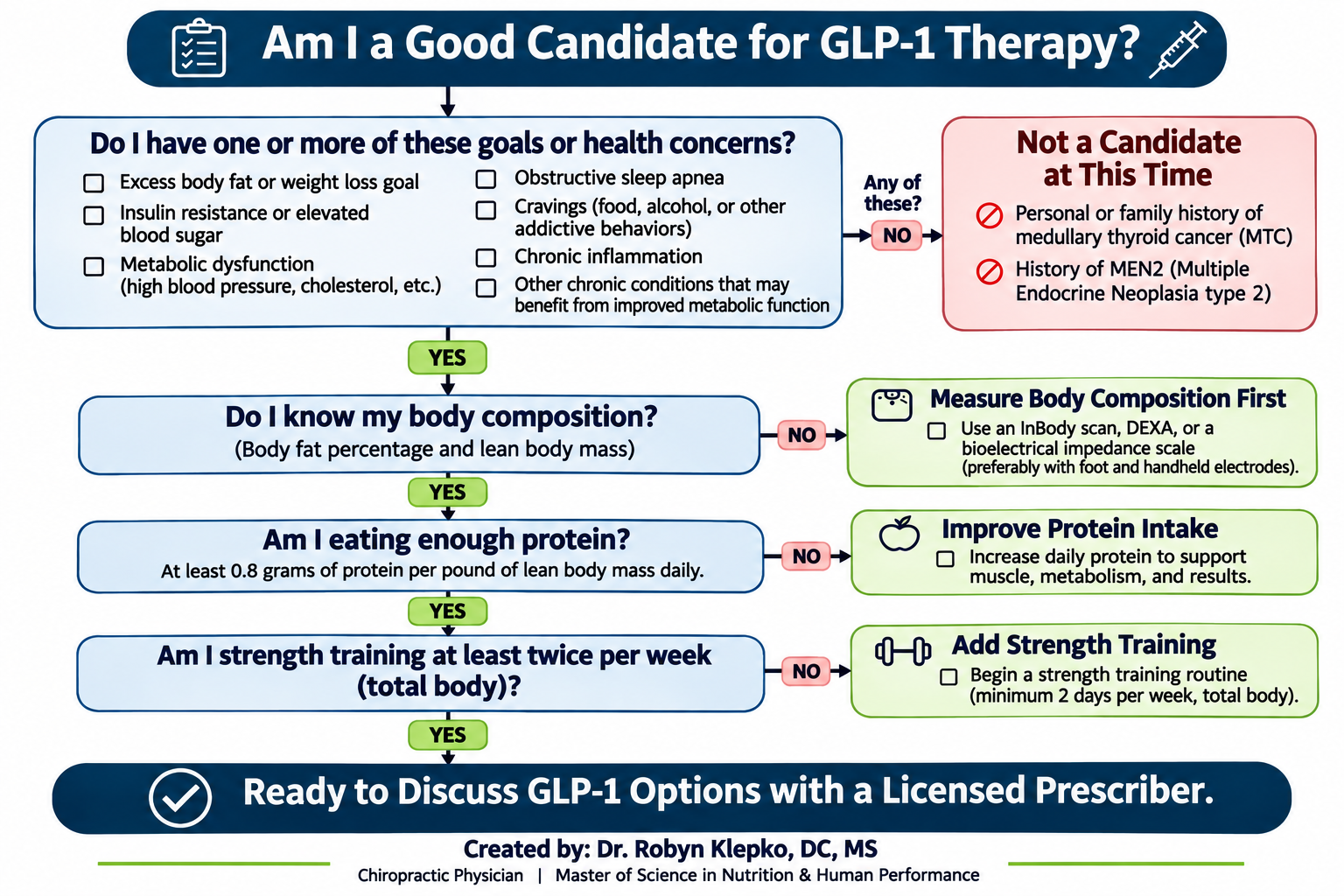
Medication selection also matters. GLP-1 therapy is not appropriate for everyone, including patients with certain personal or family histories of medullary thyroid carcinoma or MEN2. Pregnancy and pregnancy planning require specific consideration.
My philosophy is to use the lowest effective treatment intensity that supports meaningful metabolic improvement while allowing the patient to maintain adequate nutrition, strength, and quality of life.
Are GLP-1 Medications Right for Me?
This is ultimately the most important question.
GLP-1 therapy may be worth discussing if you are struggling with excess weight, obesity-related metabolic complications, type 2 diabetes, or other conditions for which these medications have established benefits.
But I also want patients to consider several questions:
Am I willing to prioritize protein and adequate nutrition?
Can I commit to consistent resistance training?
Am I interested in improving metabolic health, not just losing pounds?
Do I understand that medication is one part of a long-term plan?
GLP-1 medications can be powerful tools. But they work best as part of a comprehensive approach that includes nutrition, exercise, metabolic health, and individualized clinical oversight.
Accessing GLP-1 Therapy Through My Telehealth Platform
One of the biggest frustrations patients face is navigating insurance restrictions, medication coverage, and unpredictable out-of-pocket costs.
I believe patients deserve a straightforward way to explore their options and make informed decisions about their metabolic health.
Through my telehealth platform, eligible patients can access a medical evaluation and explore available treatment options without having to navigate the traditional insurance approval process.
Every prescription is subject to review and authorization by a licensed medical prescriber. The platform provides access to the prescribing medical team for medication-related questions and ongoing support.
The platform's clinical advisory leadership includes physicians with training backgrounds at institutions such as Harvard Medical School, Mayo Clinic, and Johns Hopkins.
My goal is to help you approach metabolic health with a clear understanding of your options and the importance of protecting your long-term health throughout the process.
Which GLP-1 Treatment Approach Is Right for You?
Choosing the right GLP-1 treatment depends on your health goals, body composition, metabolic health, and how much weight you're looking to lose.
Low-Dose / Microdose Tirzepatide
For patients who have less weight to lose or are interested in the potential metabolic and anti-inflammatory benefits of GLP-1 therapy, I often prefer starting with a conservative, low-dose approach.
Microdosing involves doses below standard treatment protocols. While this approach may be considered individually, research on microdosing remains limited, particularly for inflammation and other emerging uses.
Standard Tirzepatide Weight Management
For individuals seeking more substantial weight loss, standard tirzepatide dosing may be appropriate. Treatment generally begins at a lower introductory dose and is adjusted based on your response, tolerance, and individual goals.
Not Sure Which to Choose?
You don't have to figure it out on your own! My telehealth platform makes it easy to connect directly with the medical team before choosing a treatment.
Ready to Get Started?
Getting started is simple:
Create your account through my telehealth platform.
Message the medical team with any questions about medication options, dosing, or your individual health goals before making a purchase.
Select your preferred treatment and complete the required medical information and checkout.
Physician review and approval: A prescribing physician reviews your medical history and determines whether the requested treatment is appropriate. If approved, your prescription is processed and shipped directly to you.
You can continue communicating with the medical team throughout your treatment.
Create Your Account & Explore GLP-1 Treatment Options
Want to Take a Deeper Dive Into Your Health?
GLP-1 therapy is just one tool for improving metabolic health. If you're new to my practice and would like to explore the bigger picture, I offer comprehensive Functional Medicine consultations, both virtually and in person.
Together, we can investigate underlying factors contributing to inflammation, hormonal imbalances, gut health concerns, metabolic dysfunction, and other chronic health challenges through personalized assessments and advanced laboratory testing.